Showing posts with label Freedom. Show all posts

Thursday, January 14, 2021

(1972) A Little Bit of Miles ***1/2


With: Mal Waldron (piano), Henk Haverhoek (bass), Pierre Courbois (drums)
Record date: February 9, 1972


Only a few days after the release of ‘Blues for Lady Day’ Mal made a live appearance at the Hot House in the Dutch city of Leiden. He was joined by two Dutch musicians from a bit different signature: Henk Haverhoek on bass and Pierre Courbois on drums. Haverhoek was more a mainstream kind of jazz guy playing with the likes of Dexter Gordon, Johnny Griffin and Art Taylor. Courbois was more free jazz oriented, know for records with musicians like Gunter Hampel, Peter Brotzmann and Willem Breuker.

I always wondered why the album got the title ‘A Little Bit of Miles’. For the same title song you’d probably say but then I wonder why that song got that name. It’s a very, very, very little Bit of Miles one could here on this record. In fact: it’s a typical Waldron album with typical Waldron compositions. It makes one think of the theme of ‘The Call’ a little bit sometimes. The title song is a nice up tempo kind of song with a bluesy feel and lots of the repetitive vamps he’s known for. As the music progresses the playing gets more and more intense. Haverhoek is playing really great bass lines, daring to leave his own comfort zones, yet he is a bit far out in the mix which makes it hard to really focus on what he’s doing. In his soloing you could hear it better and though not mind-blowing he plays really nice: leaving more traditional song structures and daring to actually tell something. Courbois is more in front of the mix but that’s not a bad thing as he really does a good job reacting on what Mal’s his doing. With Mal’s percussive style it sometimes almost sound like a drum battle between the two.

On side B there’s another lengthy composition: ‘Here, There and Everywhere’. It starts with lightly waltzing Monkish theme. Mal being backed up by Courbois’ cymbals. After that the solos start with the modal theme in the background, getting more swinging and leaving the theme of the song behind. So beautiful to hear how Mal’s hands also interact with each other: his left setting the beat and his right one reacting on it. Also nice to hear Haverhoek playing with repeating theme’s in his solo too, clearly inspired by Mal.

‘A Little Bit of Miles’ was released on Freedom records in 1974 in both Germany and Japan. The vinyl versions aren’t too hard to find. I have got the Japanese reissue from 1985 which sounds good: not a single pop or click. But as I stated before, Haverhoek is a bit too far up in the mix. I don’t have any comparison but I thinks that was a recording issue and probably every version has that same problem. For cd lovers: the Freedom cd version from Japan is pretty hard to find. Both of the songs here were released on the cd version of ‘Blues for Lady Day’. The music is also available on streaming services these days. Definitely worth checking out, but not necessarily essential.

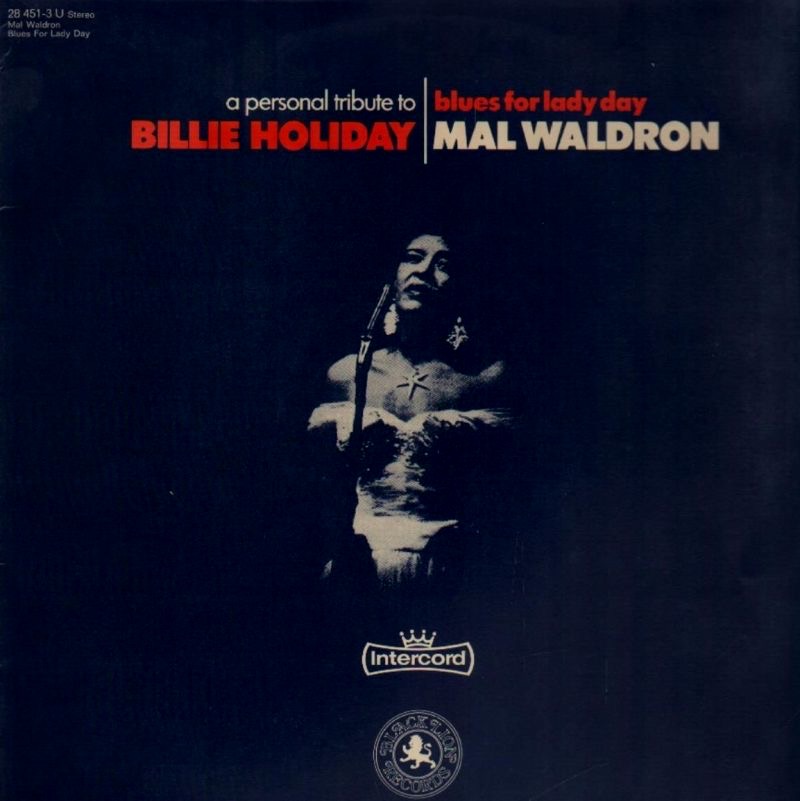
(1972) Blues for Lady Day ***


With: Mal Waldron (piano)
Record date: February 5, 1972


1972 would become another very productive year for Mal, delivering multiple solo works and a few records with great groups. He still spend most of his time in Europe or in Japan. His first record of that year was recorded in Baarn, the Netherlands. It’s one of his multiple tributes to Lady Day who he accompanied till her death. When Billie died, Mal was devastated and he always kept her in a special place in his heart. He pad tribute with multiple records recorded in her honor. Not just songs, but full albums! ‘Blues for Lady Day’ was his second, after the previous record with Kimiko Kasai.

On ‘Blues for Lady Day’ he plays 9 jazz standards that are all more or less affiliated with Billie Holiday. Mal Waldron solo could be very, very interesting but also in some cases: a bit dull. This record is rated pretty high on websites like RYM and Allmusic but I personally do not really hear what all the fuzz is about. Mal plays 9 standards in a very decent way. Decent… no more, no less. There’s not that familiar tension in his playing, but it also lacks some emotional feel, which is weird because some of the songs should really have that feeling. It’s a nice listen and you wouldn’t piss anyone off playing it when you have visitors for a coffee but Mal made such better records. His soloing also sounds a bit uninspired like he just didn’t have his day.

Highlight of the album is probably ‘You Don’t Know What Love Is’. Now, the original by Billie could almost make me cry, and Mal captures the right atmosphere here. It has that beautiful sadness over it. His handling of 'Strange Fruit' is also beautiful with the dark and low tones from his left hand. 

‘Blues for Lady Day’ was originally released on Black Lion, which means it is still widely available on second hand vinyl for a low price. You have a choice from 8 different kind of versions, also on labels affiliated with Black Lion like Arista, Freedom and Trio. The 1993 cd version, with different artwork, has a nice bonus for vinyl haters: it contains the whole session of ‘A Little Bit of Miles’ which was recorded after this one that same year. That one is pretty difficult to obtain on cd. Also, the music is available in high resolution files and trough multiple streaming sources. Give it a spin and see how you like it. To me, this is not an essential record.

Monday, January 11, 2021

(1971) Signals ***1/2


With: Mal Waldron (piano solo)
Record date: August 14, 1971


In August 1971, Mal was back in Holland again and recorded his third solo studio record. His first was ‘All Alone’ , the second ‘Tokyo Reverie’. And just like that album, ‘Signals’ is full of Mal originals and there are no standards. Generally, Mal is at his best playing his own work or perhaps that of Monk, especially when he is solo. Where ‘Tokyo Reverie’ sounds a bit uninspired and lost at times, ‘Signals’ is better. Mal does sound inspired here, although he not manages to reach the level of his live solo outings.

The title song start with some uncomfortable dissonant tunes that slightly go up into a more accessible melody. It’s a typical dark Mal theme with some kind of march feel in it. Like a national anthem from the 19th century, played by a military march band. From there Mal’s stretches out in his usual style. The same goes for ‘Things That Go Bump in The Night’ (lovely title), which has a more bluesy feel. Mal stretches out again, changes rhythms, changes and themes trough the song, which keeps the he attention of the listener. Again there are hints of classic composers like Satie, especially at the end of the song. Mal once stated he learned from Satie that less was more in a lot of cases. And that more definitely wasn’t always better. According to Mal, that was a problem to some of the jazz pianists in his days that always tried to play as much notes as possible. Yet Mal, modest as he was, never really criticized his colleague musicians. ‘If there’s an audience, the music is good, even if there is only one: then still one person enjoys it’. Plenty of wisdom by Mal there. 

Side B continues where side A ended. It’s a great showcase of Mal’s developments since 1966. This is a very different Mal than on the 1966 recording ‘All Alone’ for GTA records. The music here is more advanced and developed and Mal sounds more secure en definite. He never played the originals again on other albums.

‘Signals’ was recorded in The Netherlands but first released in the US on the ‘Freedom’ label in 1977. After that it was issued three more times on vinyl, but never on cd. The LP’s are widely available for low prices (especially for a Waldron record). Also there’s a digital and remastered version available trough Amazon music, Spotify etc. Recommended, but not essential. Mal has mad worse but also better solo albums.

Saturday, January 9, 2021

(1971) Number Nineteen *****


With: Mal Waldron (piano), Dick van der Capellen (bass), Martin van Duynhoven (drums)
Record date: 30 May 1971


Back in Europe Mal did what he did most time of the year when he was there: touring. Mal has recorded a lot in Germany, Belgium, France, Italy and also: the Netherlands. Number Nineteen was the first record he made in Holland and just like on so many of his other records he used local musicians to join him both live as in the studios. For this session he was joined by Dick van der Capellen on bass and Martin van Duynhoven on drums. And just as with all those other relatively unknown musicians: again it’s a pretty big success. Both van der Capellen as van Duynhoven really know how to play. It makes you wonder why such musicians are not better known. Perhaps they peaked in a period that popularity of jazz music was really declining. It leaves much up to imagination of what they could have been if jazz musicians were still the most in demand musicians. Both van der Capellen en van Duynhoven mostly appeared with Dutch musicians with a few exceptions. Especially the drummer’s discography is pretty big.

‘Number Nineteen’ starts of on side A with the title song. A long 22 minute song which is one of the very best from Mal’s entire discography. It’s an intense suite that goes pretty much everywhere: from slow and more emotional passages to highly intense on the beat playing. The music is pretty free yet very structured. Both van der Capellen as van Duynhoven seek their freedom mainly between certain lines which makes the music not too far out but still very exciting. Mal is playing beautiful deep and bluesy repetitive phrases till you’re in an almost hypnotized state of mind. The bassists’ solo really stands out here. He sounds inspired by bassists like Jimmy Garrison and Reggie Workman. Beautiful full and dark rich tones, very much in the atmosphere Mal tries to create here.

On side B there is ‘Trip’ which really do sound like a trip. It’s a song with complex off beat rhythms with a huge role for Martin van Duynhoven who matches up perfectly. Also nice to hear how van der Capellen plays with motives from the main theme in his solo. Watakushi No Sekai starts with a very majestic theme, almost march like. The Eastern feel remains during the whole song but is the strongest during the theme. The following solo by Mal is fantastic with that deep and dark feel, playing harder and intenser as the song progresses. Unbelievable how a pianist who plays only just a few notes still manages to surprise time and time again and keep his solo a fascinating listen all trough. Mal is predictable yet also unpredictable which creates a very nice feeling of tension in his music. And again especially van Duynhoven’s drumming work is insanely good. After the mysterious theme again the record comes to an end. And one wishes there was more to listen to by this group.

‘Number Nineteen’ is pretty hard to find these days. It was only released once by Trio/Freedom records, of course: Japan only. When it pops up at the Discogs or Ebay it is not necessarily over expensive. I bought mine for 30 euros including shipping from Japan. The sound, as with most Japanese releases, is great. Nowadays, British label ‘Black Lion’ has also released this on Spotify and Amazon music. So it’s available in high quality digital files also. Number Nineteen is one of the highlights from Mal Waldron’s career. It’s music that should be played loud only. Highly recommended stuff! Their you go: the first five star album for me in his discography. More will follow :)